Enclosed vs Outdoor RV and Boat Storage in Des Moines
Enclosed vs Outdoor RV and Boat Storage in Des Moines
Tom Gustafson
July 15th, 2026
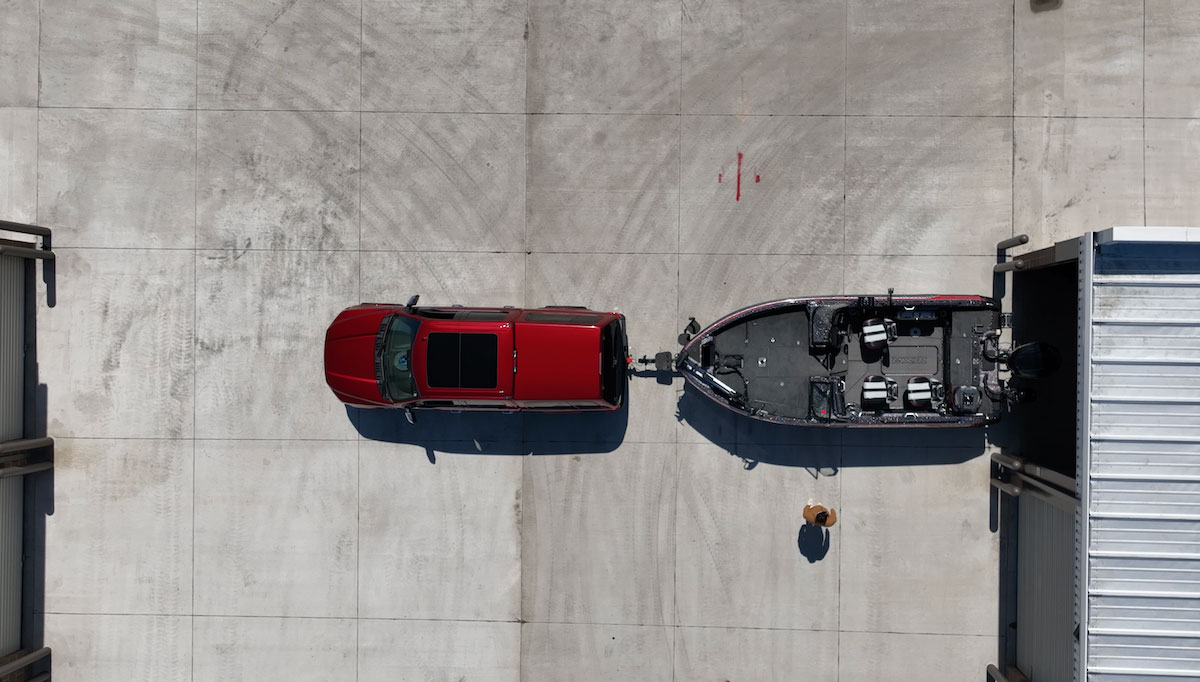
You have three real ways to store an RV or boat around Bondurant: an enclosed unit you drive into and lock, an outdoor lot where it sits in the open, or your own driveway or side yard. The same three choices cover anything large: a wake boat, a landscaping trailer, a box truck, or the overflow inventory a business has outgrown its garage. The right call comes down to two things, what the thing is worth to you and how an Iowa winter treats it sitting still. Enclosed storage protects the most and costs the most, and it earns that on anything you plan to keep for years. An outdoor lot is the cheapest paid option and fine for a short stint or an older rig you do not mind weathering. Parking at home is free, if you have the room and the rules allow it. Here is how all three compare, so you can pick without guessing.
Key takeaways
- Enclosed storage is the top tier. It handles weather, freeze, and security, and it is worth the money on anything you will own for years, a camper or a trailer full of tools.
- An outdoor lot is the cheapest paid option and a fair call for short-term parking or something you have already gotten your money out of.
- Parking at home costs nothing, but Bondurant, Altoona, and Ankeny each set rules, and those often cover work trailers and commercial vehicles as strictly as campers. Your HOA may add its own.
- Match the storage to what the thing is worth and how often you reach for it, not to the lowest monthly number.
First, be honest about how you will use it
Most people pick storage backwards. They start with the monthly price, rent the cheapest thing that fits, and find out in April what that decision cost them: a dead battery, flat-spotted tires, and a soft spot in the roof where water sat all winter.Start somewhere else. Ask what the thing is worth to you, how long it will sit between uses, and whether you can get to it when you need it. A boat you pull every weekend all summer has different needs than a fifth wheel that sleeps from October to May, and both are different from a work trailer a contractor has to load at 5 a.m. in February. Access is the piece nobody thinks about until the one morning they need it. Answer those questions first and the right option usually picks itself.One thing worth saying up front, because people almost always miss it: you need more room than you think to move around the thing once it is parked. Room to open a slide-out, swing a truck door, or get a pallet jack down the side. The space that looked fine empty stops being fine the first time you are actually working in it.
What are your three options for storing an RV, boat, or trailer near Bondurant?
There are really three, and the industry words for them matter, because you will see them on every listing.Enclosed storage is a private unit you drive into, with four walls, a roof, and a door that is yours alone. Think of a garage built for a rig. This is the top of the ladder for protection. Some people call it indoor storage, but that word usually means a shared warehouse bay, which is a different thing. Enclosed means the space is yours.An outdoor lot is open parking, gravel or paved, sometimes behind a fence, sometimes with a roof over it. A roof with open sides is called covered storage. Either way the thing sits in the weather.Parking at home is your driveway, a side pad, or a spot behind the house. Free, close, and the first thing most people try, right up until a city ordinance or an HOA letter puts a stop to it.The labels are the same whether you are storing a motorhome, a wake boat, or a skid loader on a trailer. What changes is which one is worth paying for, and that is the rest of this post. One term to get straight before we go on: climate controlled and temperature controlled are not the same. Temperature controlled only holds a temperature. Climate controlled holds a temperature and pulls humidity out of the air, which is the part that actually protects wiring, upholstery, finishes, and anything with a cure temperature through a damp Iowa spring.
When is parking it at home the right call?
Sometimes it just is. If you have a paved pad beside the house, a rig short enough to fit without hanging into the street, and no covenant telling you otherwise, park it at home and keep your money. I will say that plainly even though it means you rent from nobody, because it is true.The catch is that "if the rules allow it" does a lot of work in that sentence. Iowa cities each write their own, and they tend to cover the same things: how long a recreational vehicle can sit on a residential lot, whether it can go ahead of the setback, how close to the street or the property line, and whether it has to be screened from view. Bondurant publishes its current rules in the City of Bondurant Code of Ordinances, and Altoona and Ankeny each have their own. Read the one for your city before you assume the pad by the garage is legal.This is not only a camper question. Plenty of cities and covenants limit parking a work trailer, a box truck, or a commercial vehicle at a home too, sometimes more tightly than a motorhome. If the thing has a ladder rack or a company logo on the door, read the fine print before you leave it in the driveway.Then there is your HOA, a separate layer on top of the city. Covenants vary subdivision to subdivision, and plenty of the newer neighborhoods around Bondurant do not allow a camper or a boat trailer in the driveway at all. The city can say yes and your HOA can still say no. Check both. We are writing a full Bondurant, Altoona, and Ankeny breakdown as its own post, with the actual code sections, so treat this as the short version.
What does an outdoor lot actually cost you beyond the rent?
The monthly price on an open lot is low, and for the right situation that is the whole story. For an older trailer you have already used up, or a boat you will pull every other weekend from May to September, an outdoor space is a reasonable call. You are paying for a spot, and a spot is what you need.The cost that does not show up on the invoice is what the weather does over a full year. Sun is hard on everything it touches. UV dries out tires, cracks seals, and fades gelcoat and decals. A trailer left on a gravel lot through an Iowa spring usually comes back with the tires sitting in ruts and a stabilizer jack you have to dig out of the mud. Water is the real one. A lot that puddles works moisture up under a cover into places you will not find until something is already rotting. Add hail, add mice looking for somewhere warm, and add the fact that a camera watching a whole lot is not the same as a camera on your unit. None of that is a reason to panic. It is the bill that comes due later instead of now.For a business the math is sharper, because an open lot is not risking a camper you use twice a year. It is risking the tools you work with tomorrow. A trailer of equipment sitting in the open, with no power and no camera on it specifically, is a bad Monday waiting to happen, and the downtime while you sort it out costs more than the storage ever did.
What does enclosed storage protect that the others do not?
Walls and a roof stop the sun, the hail, and the water, which is most of the damage right there. But the piece people underrate is power.An enclosed unit with an outlet means you can plug the thing in. A battery maintainer keeps the battery alive through the winter, so the rig starts on the first warm Saturday instead of leaving you jumping it in the driveway. Plug in a small dehumidifier and the inside stays dry instead of building up the mildew smell that never fully comes out of cushions. That single outlet, what the industry calls shore power, is the difference between a rig that is ready in spring and one that needs a weekend of work first.For a business the same outlet does different work. It charges a bank of tool batteries overnight, runs a compressor, keeps a trickle charger on the equipment, so a crew is not hauling everything out to charge it somewhere else at six in the morning. Power in the unit is the line between a shed and a space you can actually work out of.The other quiet advantage is a dry site. Walls do not help much if the lot they sit on holds water. A property graded to move rain and snowmelt away from the units keeps the floor dry, which matters more over ten winters than almost anything else on the brochure.Enclosed storage costs more than an open lot. It should, because it does more. The question is never which is cheaper. It is whether what it protects is worth the difference, and for anything you plan to own for years, it usually is.
So which should you choose?
Run it through three questions.
- What is it worth, and how long will you keep it? The more it is worth and the longer you will own it, the more enclosed storage pays for itself. A rig on its last few seasons does not need the same care as one you just bought, and neither does a trailer you will replace next year.
- How often will you reach for it? Something you pull every weekend all summer, or a work trailer you load daily, wants easy in-and-out, and an open lot or a spot at home can beat threading into a unit. Something that sits for months wants protection more than convenience.
- Can you keep it at home at all? If the rules allow it and it fits, that is the cheapest answer and often the right one. If the city or the HOA says no, the choice is between an enclosed unit and an open lot, and the first question decides it.
There is no single right answer, which is the honest part most storage pages leave out. There is a right answer for your rig, your budget, and how you actually use it.
Where our facility fits
Dynamic Storage Spaces XL was built for the enclosed end of this. Our units run from 14 by 35 up to 18 by 50, every one has power and motion-sensor lighting, and the drive aisles are 65 feet of concrete. We made them that wide on purpose. Back a 34-foot fifth wheel into a 30-foot lane and you will clip something eventually, so we gave you the room to do it alone, at night, on the first try. The 16-wide and 18-wide units add climate control if you want it, with in-floor heat and dehumidification, and the biggest doors clear 16 feet, which is box-truck and equipment territory, not just campers. The phone-based lock is shareable, so a spouse can grab the boat or a crew can get into the trailer without you driving over to unlock it. It is family owned, gated, camera covered, and 1,500 feet from Lake Petocka, minutes from Saylorville and Big Creek. If you are weighing enclosed storage, see the size guide for what fits, check current availability and pricing, or get directions from Altoona, Ankeny, and Pleasant Hill. And if you have a driveway and no covenant, park it at home. We would rather tell you that than rent you a unit you do not need.
Frequently asked questions
Is enclosed RV storage worth it?
For anything you plan to keep for years, usually yes. Enclosed storage stops the sun, water, and hail damage that an open lot lets through, and with power in the unit you can keep the battery charged and the inside dry. For an older rig you will replace soon, or one you use most weekends, an outdoor lot can be the smarter spend.
Can I park my RV at my house in Bondurant?
Maybe. It depends on your city's current ordinance and your HOA covenants, which are separate rules that both have to allow it. Check the City of Bondurant Code of Ordinances for the city side, and read your subdivision's covenants for the rest. Altoona and Ankeny each have their own rules.
Will a Class A motorhome fit in an enclosed unit?
It depends on the door, not just the length. Most Class A coaches and tall fifth wheels stand 12 to 13.5 feet high, so a 12-foot door will not clear them. Our 16-wide units have 14-foot doors, which clear the 13-foot-6-inch legal road-height maximum, so if it is road legal, it fits. Measure your rig's true high point, including the roof air conditioner, before you rent anywhere.
Can I store a work trailer, box truck, or business equipment?
Yes. The oversized units, 24/7 access, and in-unit power suit trades and small businesses as well as they suit campers, and the largest doors clear a box truck. Power runs chargers and a compressor, and climate control protects finishes, adhesives, and electronics that an unheated Iowa building would ruin. It is the same decision in this post, only with the meter running twelve months a year instead of one winter.
Does an outdoor lot really damage tires and seals?
Over a full year, it can. UV dries and cracks tires and rubber seals, and a rig parked in one spot through the cold can develop flat spots on the tires. A cover and a set of tire mats help. Enclosed storage sidesteps most of it.
Ready to figure out your setup?
If you are trying to decide what fits and what it costs, the fastest way is to talk to someone who has watched hundreds of rigs back into these units. Check availability and pricing, or call (515) 827-4545 and ask for a tour. We will tell you straight whether an enclosed unit is worth it for your rig, or whether you are fine parking it at home.
Categories