Storage Unit vs Leasing Shop Space for Your Business
Storage Unit vs Leasing Shop Space for Your Business
Tom Gustafson
July 23rd, 2026
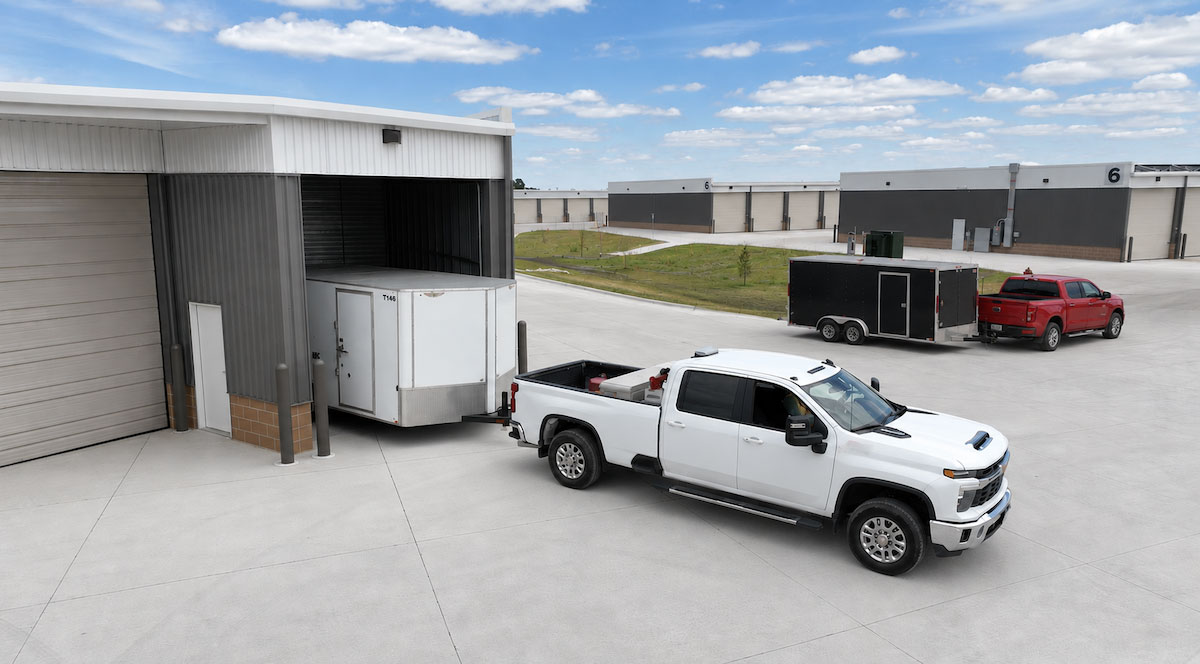
For most contractors and small businesses, a powered storage bay beats leasing shop or flex space when what you mainly need is a secure place to keep tools, materials, a trailer, or inventory, and to get a crew in and out. A bay rents month to month at a flat rate, with no build-out, no security deposit, and no triple-net charges stacked on top. A commercial lease wins when you need a customer-facing address, zoning for manufacturing, food, or auto work, staff on site full time, or a loading dock and three-phase power. The honest line most storage pages skip: you store, stage, and load out of a bay, you do not run a storefront from one, and your zoning and lease will say the same. Here is how to tell which one your business actually needs.
Key takeaways
- A powered bay rents month to month at a flat rate, with no build-out, deposit, or triple-net charges. A commercial lease usually locks you into years.
- A bay is for storing, staging, and loading, not for running a customer-facing or manufacturing operation. Check your zoning and your lease.
- The features that make a bay work like a small shop are in-unit power, climate control on the larger units, and a phone key you can share with a crew and shut off when someone leaves.
- A lease wins when you need foot traffic, special zoning, full-time staff on site, or a dock and three-phase power.
- The number to compare is not the bay rate against a gravel lot. It is the flat bay rate against base rent plus everything a lease adds on top.
The garage is full and the truck is not a storage unit
It usually starts the same way. The garage fills up, the good tools ride around in the truck because there is nowhere better, and the work trailer cannot sit on the street without a ticket. You are moving the same pallet twice to get at the one behind it, and you are burning a Saturday looking for a saw you know you own.The obvious fix is to lease a shop. Sometimes that is right. Often it is a bigger commitment than the problem calls for, and a secure bay solves the actual issue for a fraction of the cost and none of the term. The trick is knowing which situation you are in before you sign anything.
What is the real difference between a storage bay and leasing shop space?
On paper they can look similar, a big space with a door you back into. The difference is in the terms, and the terms are where a lease gets expensive.A commercial lease is a contract, usually for years, not months. Base rent is only the start. Most leases add the property taxes, the building insurance, and the common-area maintenance on top, which is what "triple net" or NNN means on the listing. Then there is a security deposit, and usually the cost of building the space out to suit you, walls, power, a bathroom, whatever the raw shell is missing. You are also on the hook for the term whether the work stays busy or not.A storage bay is the opposite shape. Month to month, a flat rate you can look up on the availability and pricing page, no NNN, no deposit chase, no build-out, because the power and lighting are already in it. You can add a unit when you land a bigger job and drop it when the season turns. For a business that flexes, that difference is the whole decision.
What does a commercial lease actually cost once you add it all up?
The rent number on the sign is the smallest part of the bill. Add the triple-net charges, a deposit that can run a month or more, and a build-out you pay for and then leave behind when the lease ends. The U.S. Small Business Administration points out that leasing can cost less than buying, but that is leasing against ownership, not against a storage bay, and it still assumes you need a full commercial space in the first place.The cost that never shows up on the spreadsheet is the term. A lease locks you in. If the work slows, you still pay. If it booms and you outgrow the space, you are negotiating out of a contract instead of just renting the next unit over. For a lot of trades and small operations, what they are really buying with a lease is a commitment they did not need, at a price that assumes staff, plumbing, and a storefront they are not using.
Can you actually run your business out of a storage bay?
Here is the honest answer, because it matters and most storage sites dodge it. A bay is for storing, staging, and loading. You can keep tools, materials, a trailer, and inventory in it, charge batteries, run a compressor, and send a crew to pull what they need for the day. That covers what a huge share of contractors and small businesses actually do.What you cannot do is run a customer-facing storefront, manufacture, or have employees clock in and work there full time. Storage zoning does not allow it, and neither will the lease. If your plan involves walk-in customers, a permanent workforce on site, food, or auto work, that is a commercial space question, not a storage question. Check your local zoning and read the storage agreement before you build a plan around a bay, the same way you would vet any lease.
Which trades and businesses is a bay a fit for?
The list is long because the need is common. Electricians, plumbers, HVAC techs, landscapers, remodelers, concrete and roofing crews, painters, anyone with a trailer, a rack of tools, and material that has to live somewhere secure with power. The bay holds the trailer and the gear, the crew loads out in the morning, and the truck is not the tool room anymore.It also fits the businesses that are not trades. An e-commerce seller with inventory overflowing the spare room. An event or rental company storing gear between jobs. A seasonal retailer parking stock in the slow months. A service business that needs somewhere to keep work vans, a box truck, or a fleet trailer overnight. If the thing you need is space with power and access, and not a storefront, a bay is usually the cheaper, simpler answer.
What makes a bay work more like a shop than a locker?
Four things, and the first one is the one nobody else around here is selling.A phone key you can share and shut off. The lock is on your phone, and you can hand a copy to a crew member for a job and cut it off when they leave the company or the job wraps. No copied keys floating around, no lockbox on the gate, nobody driving across town at 6 a.m. to let a crew in. For an owner running a trailer full of expensive tools, controlling who can open that door, and changing it in a tap, is an operational feature, not a convenience.Power in every unit. An outlet in the bay charges a bank of tool batteries overnight, runs a compressor, keeps a maintainer on the equipment. That is the line between a space you store things in and a space you can actually work out of.Climate control on the larger units. Heat, air conditioning, and dehumidification protect the things an unheated Iowa building ruins: adhesives, paint, finishes, print stock, electronics, anything with a cure temperature. Climate control is optional, so you pick it only if what you store needs it.Doors and aisles built for real equipment. The biggest doors clear a box truck, and the concrete aisles are wide enough to turn one without a spotter. A locker with a five-foot roll-up cannot say that.
When is a commercial lease the right move?
Plenty of times, and pretending otherwise would not do you any favors. Lease real commercial space when you need a customer-facing address with foot traffic, when your work requires zoning for manufacturing, food production, or auto repair, when you have employees on site full time and need restrooms, offices, and break areas, or when you need a loading dock, three-phase power, or a permanent forklift. If that is you, a bay is the wrong tool and a lease is money well spent.The point is not that storage always beats a lease. It is that a lot of businesses sign a lease to solve a problem a bay solves for less, because nobody laid the two side by side. Now you have.
Where our facility fits
Dynamic Storage Spaces XL is built for the business end of this as much as the recreational one. Units run from 14 by 35 up to 18 by 50, every one has power and motion-sensor lighting, and the largest doors clear 16 feet, which is box-truck and equipment territory. The drive aisles are 65 feet of concrete, so you turn a trailer without a second person. The 16-wide and 18-wide units add climate control if your materials need it. The phone-based lock is shareable, so your crew gets in without copied keys and you control who has access. It is family owned, month to month, gated, and camera covered, and 24/7 access means the bay is open when your day starts, not when an office does. Look at what fits in the size guide, or check current availability and pricing. Cameras and gates reduce risk, they do not erase it, so keep your own tools and inventory insured either way.
Frequently asked questions
Can I run a business out of a storage unit?
You can store inventory, equipment, tools, and vehicles in one, stage jobs from it, and load out daily. You cannot run a customer-facing storefront, manufacture, or have staff working there full time, because storage zoning and the lease do not allow it. If your plan needs walk-in customers or a permanent crew on site, that is a commercial lease question. Check your local zoning first.
Is a storage bay cheaper than leasing shop space?
For most trades and small businesses, yes, once you count everything. A bay is a flat monthly rate with no triple-net charges, no deposit, and no build-out, and you can look up the current rate on the pricing page. A commercial lease adds taxes, insurance, maintenance, and a multi-year commitment on top of the rent.
Can my crew get into the unit without me there?
Yes. The lock is controlled from a phone, so you can share access with a crew member and shut it off when the job ends or they move on. No copied keys, no lockbox, and no driving over to let anyone in.
Is there power in the unit?
Every unit has interior electricity and motion-sensor lighting. That runs battery chargers, a compressor, a trickle charger, or a dehumidifier, which is what makes a bay usable as work and staging space rather than just a place to set things down.
Can I store a work van, box truck, or equipment trailer?
Yes. The oversized units and wide concrete aisles are built for exactly that, and the largest doors clear a box truck at 16 feet. If it is road legal, it fits through the 16-wide units. Measure your tallest point before you rent anywhere.
Ready to price it against your lease?
The fastest way to know whether a bay beats a shop lease for your operation is to walk one and run your own numbers. Call (515) 827-4545 and ask for a tour, or check availability and pricing first. The owners answer the phone, so you can ask exactly what fits and what it costs before you drive out.
Categories