
Classic Car Storage Near Des Moines, What Actually Matters
Classic Car Storage Near Des Moines, What Actually Matters
Tom Gustafson
October 29th, 2026
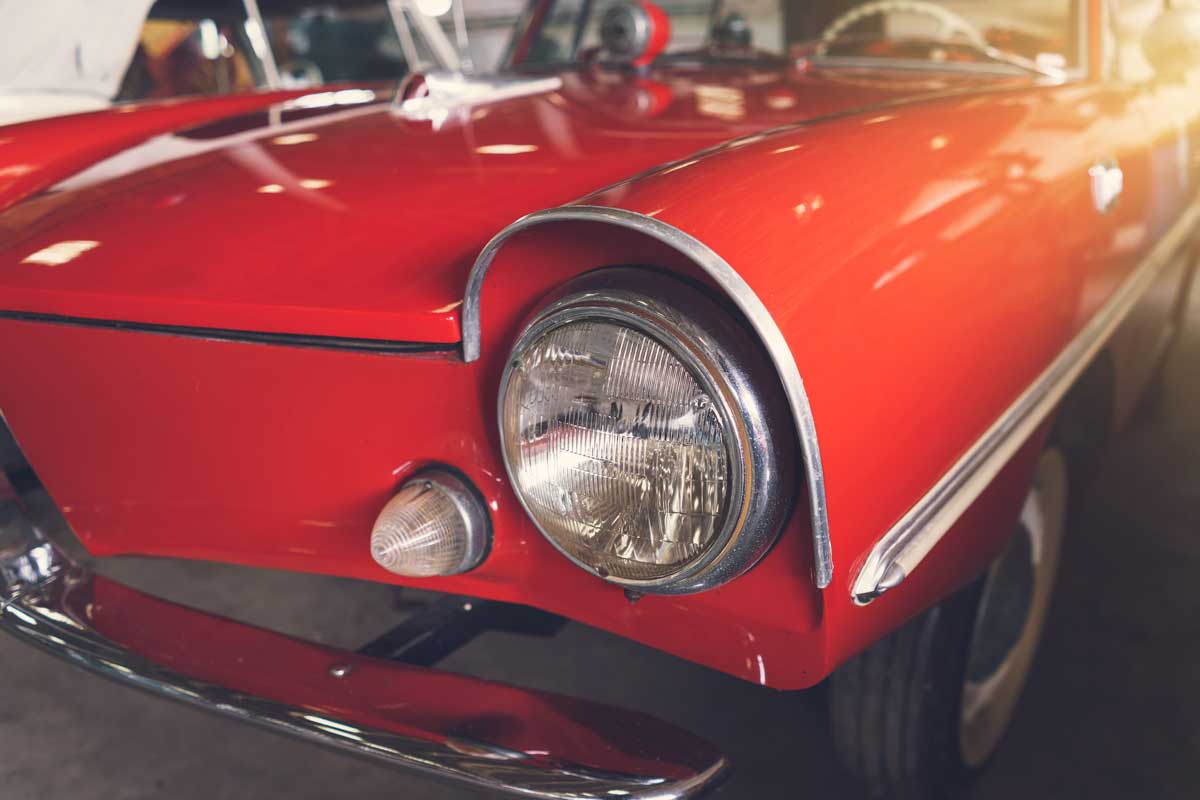
Classic car storage near Des Moines comes down to a handful of jobs done once, in the right order, before the salt goes down: fresh oil, a full tank with stabilizer, a maintainer on the battery, and tires that are either aired up or carrying no weight at all. Park the car somewhere enclosed and dry where mice cannot get in, and it comes through an Iowa winter fine without a heated garage. Skip the prep and the bill shows up in April, not January. Climate control earns its cost in a narrower set of cases than most owners assume, and starting the car every couple of weeks does more harm than good. Here is what actually protects the car, and where you can stop spending.
Key takeaways
- Fresh oil, a full tank with stabilizer, and a battery maintainer handle most of what goes wrong over a winter.
- Cold stiffens tires, and months on the ground can flat-spot them for good. Get the weight off them if the car will sit until spring.
- Do not set the parking brake. Do not start the car every few weeks.
- Mice cause more storage damage than cold does. An enclosed unit with no gaps beats a barn every time.
- A prepped car is usually fine without heat. Climate control earns its cost on original interiors and soft tops.
Why does a classic come off Iowa roads before winter?
Salt. The Iowa DOT says it puts down more than 101,000 tons of salt and nearly 25 million gallons of brine in a typical year, and city crews add their own on top of that. Brine goes down ahead of storms, so the roads can be coated before you ever see a flake. Des Moines averages only half an inch of snow in October and 2.7 inches in November, according to WOI's look at the local averages, which is exactly why people get caught. One pleasant November drive on treated pavement undoes a lot of careful ownership.So the practical deadline is not the first snow. It is the first time the trucks go out, and in most years that means the car should be put away in the first half of November.
What should you do before the car goes into storage?
None of this is complicated. It just has to happen before the car sits, not after.
Change the oil
AAA's storage checklist says to change the oil and filter if it has been a while, and on a car that sits five months, it has been a while. Used oil carries the byproducts of combustion, and you would rather the engine sit in clean oil than in that. It is cheap insurance that keeps a much more expensive problem from forming.
Fill the tank and add stabilizer
Fill it up and add a fuel stabilizer, then drive or run the car long enough to get the treated fuel through the lines. A full tank leaves less room for moist air to condense inside it, which matters more than people expect on a car that will not run for five months. Owners of carbureted cars sometimes go further and run the bowls dry, but that is a question for your manual or your mechanic, not a blog.
Put the battery on a maintainer
A battery left alone all winter drains, and a drained battery can freeze. AAA recommends a float-style charger built for long-term storage, which holds a battery at full rather than charging it hard. Every unit we have has an outlet, so the maintainer goes in the bay with the car and you do not have to pull the battery and carry it home.
Take care of the tires
This is the step people skip, and it is the one that costs the most when they do. Tire Rack explains that cold makes rubber stiffer and more likely to flat-spot, and that tires stored on the ground for many months can be flat-spotted permanently. Their advice for long storage is to get the car up on stands so the tires carry no weight at all. If you leave it on the tires, air them up toward the maximum on the sidewall without going over it, and recheck the pressure when the car comes out.
Leave the parking brake off
AAA is blunt about this one. A parking brake that sits applied all winter can rust in place, and freeing up a seized parking brake on an old car is not a fun weekend project. Chock the wheels instead.
Close the door on mice
Cold is a nuisance. Mice are the real damage, whether that is a nest in the air cleaner or wiring chewed through behind the dash, and the smell they leave in a headliner rarely comes all the way out, no matter how many air fresheners you run. Get every crumb and wrapper out of the interior, stuff steel wool in the tailpipe, and hang a tag on the steering wheel so you remember to pull it in April. The bigger defense is the building itself. A barn or a pole shed with a gap under the door is an open invitation, and a sealed, enclosed unit with a concrete floor is not.
Wash it, then cover it
Get the salt and road film off before it sits, let the car dry completely, and use a breathable cover rather than a plastic tarp that traps moisture against the paint. AAA also suggests desiccant packs inside the car to keep mildew down. They cost a few dollars and they work.
Should you start the car every few weeks?
No. And this is the one I would argue about, because it feels responsible and it is not.AAA's point is that idling a car for a few minutes does nothing to maintain it and only contaminates the oil, because the engine never gets hot enough to burn off the moisture and fuel it just put into the crankcase. You are adding to the problem you are trying to prevent. If you are not going to drive it on dry pavement for half an hour, leave it alone until spring.
Do you need climate control for a classic car?
Usually not, and I would rather tell you that than sell you a heated unit you do not need. A car that has been prepped the way this post describes, parked in an enclosed bay with a maintainer on the battery, comes through an Iowa winter fine without heat. Steel, glass, and a stabilized fuel system do not care that it is ten degrees outside.Climate control earns its cost in a smaller set of cases. Original leather, wood trim, a soft top you cannot easily replace, a car whose value depends on documented originality, or a car you want ready to drive on the first sixty-degree Saturday in March. Those are about humidity and stability more than cold. I would pay for it on a first-generation model that has been in one family since 1968. I would not pay for it on a project car that is already rusted through in two places. We worked through the cost side of that decision in is climate controlled storage worth it.
What size unit does a classic car need?
Less than our smallest unit, honestly. A car alone does not need a 14x35. If one car is all you are storing and a 10x20 down the road is enclosed and dry, that is a fine answer, and I would take it over upsizing into a bay you do not fill.Where our units make sense is when one car is not the whole picture. Two cars parked end to end. A car on an open trailer. A project car with its parts on shelves beside it, and enough room to walk all the way around with a creeper and a drop light. The phone key is shareable, so whoever else needs to get to the car, a spouse or a co-owner, can get in without a key changing hands. If you are still deciding between enclosed storage, an outdoor lot, and your own garage, our guide to choosing oversized storage lays out all three.
What about insurance on a stored car?
Call your agent before you change anything. A stored car can still be stolen, damaged, or caught in something that has nothing to do with driving it, and some owners drop coverage for the winter and regret it. Your agent can tell you what your own policy does while the car is parked. As a tenant you are responsible for insuring what you keep in the unit, so read your policy and the rental agreement before the car goes in.
Where our facility fits
Dynamic Storage Spaces XL is in Bondurant, just southeast of Highway 65, and a short drive from Altoona, Ankeny, Pleasant Hill, and Mitchellville. Every unit is enclosed, powered, and lit by motion-sensor LEDs, so the maintainer has an outlet and you are not hunting for a light switch in February. The site is graded to move rain and snowmelt into detention ponds, which keeps the units dry, and the aisles are 65 feet of concrete, wide enough to back a car and trailer in on the first try. The property is fenced, gated, and covered by HD cameras, which reduces risk without eliminating it. Climate control is available on the larger units for the cars that call for it, and leases run month to month, so you rent the winter and stop paying when the car comes home.
Frequently asked questions
Can I keep a classic car in a storage unit all winter?
Yes, and an enclosed, dry unit is one of the better places for it. Prep it first: fresh oil, a full tank with stabilizer, the battery on a maintainer, the tires aired up or off the ground, and the interior cleaned out so it does not attract mice.
Should I take the battery out of a stored car?
Not if the unit has power. A float-style maintainer keeps the battery at full charge in the car, and every unit here has an outlet. If your storage spot has no power, pull the battery and keep it on a maintainer somewhere it will not freeze.
Do I need to start my car while it is in storage?
No. Idling for a few minutes never gets the engine hot enough to burn off the moisture it creates, so it contaminates the oil instead of protecting the engine. Leave it alone until you can drive it properly on dry roads.
Can I work on my car in the storage unit?
Checking tire pressure, hooking up a maintainer, and pulling the steel wool out of the tailpipe in April are all part of storing a car. For anything bigger than that, ask before you plan on it, because the rental agreement governs what work can happen in a unit.
Put it away before the brine trucks roll
The best week to store a classic is the week before the first salt run, which around here usually falls in the first half of November. Call (515) 827-4545 for a tour, or check availability and pricing. We answer our own phone, and directions from Altoona, Ankeny, and Pleasant Hill are on the site.
Categories