
Contractor Storage in Bondurant, Trade by Trade
Contractor Storage in Bondurant, Trade by Trade
Tom Gustafson
October 15th, 2026
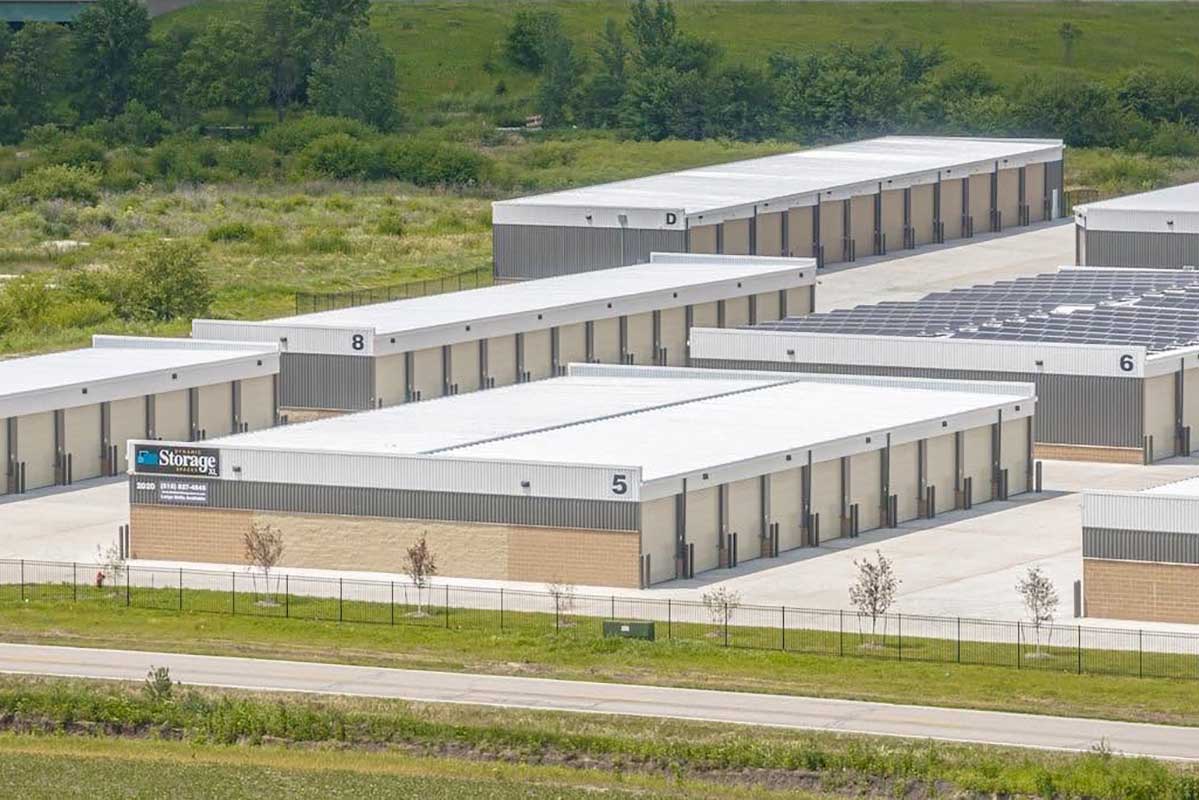
Contractor storage in Bondurant comes down to three questions, and your trade answers most of them. Does your gear need power, does it need heat, and does your crew need to get in without you? A landscaper parking a mower fleet for the winter needs room and a level floor, not heat. An electrician mostly needs security and somewhere to charge. The painter and the drywall finisher need a heated space, because latex paint and ready-mix joint compound freeze, and the first freeze around Des Moines usually shows up in the second half of October. Match the bay to what you actually store, and do not pay for heat your inventory does not need. Here is how that breaks down, trade by trade.
Key takeaways
- Power and heat are two different purchases. Most trades need power. Only a few need heat.
- Latex paint and ready-mix joint compound should not freeze. Put them somewhere heated, or do not store them through winter.
- Cordless tool batteries should not be charged below 40 degrees, which is why an unheated bay with an outlet charges them in October and fails in January.
- Mowers and small engines winter fine without heat once the fuel is dealt with.
- A phone key you can share with a crew and shut off later does more for a contractor than most features in the building. It lets a crew lead get in, and it lets you remove access when the job ends.
Why does this decision land in October?
Because October is when the truck stops being a good enough place to keep things. Around Des Moines the first freeze typically arrives near October 18, and the first hard freeze, 28 degrees or colder for a few hours, near October 28, according to WHO 13's look at the local records. After that, anything water-based riding around in a trailer is on borrowed time.It is also changeover month. Mowers come off the trailers and plows go on, exterior painting winds down, and remodelers start buying for jobs that will not begin until after the holidays. All of it has to sit somewhere for three or four months, and the trailer cannot sit on the street while it waits. Bondurant and Ankeny both prohibit it, which we went through in the local parking rules post.
Do you need power, heat, or both?
Settle this first. It decides what you rent and what you pay every month.Power runs things, like battery chargers, a compressor, work lights, or a maintainer on a skid steer that sits until spring. Heat protects things. It is for materials a freeze ruins and anything with a minimum storage temperature printed on the label.Here is the catch, and it is the part I wish more crews knew before they sign. DeWalt's charger manual says not to charge a pack below 40 degrees, and that a cold pack charges more slowly. Your brand's manual has its own number, and it is worth looking up. An unheated bay with an outlet charges batteries fine in October. In January the bay sits at whatever the weather is, and the charger just waits. If your crew runs on cordless, either take the packs home overnight in the cold months or put the chargers in a heated bay. An outlet alone will not get you there.The good news runs the other way, and it saves real money. I would not pay for heat to hold a box of ladders. Steel, copper, PVC, lumber, hand tools, and most corded power tools do not care if they freeze. If that is your inventory, you need a dry bay with power, and heat is money spent on nothing. We did the full math on the heated side in is climate controlled storage worth it.
What does each trade need from a storage bay?
Your answer comes from what is on your shelves, not from what is painted on the side of your truck. Still, the trades sort out pretty predictably.
Landscapers and lawn care
Space and a level floor, and almost never heat. A trailer with a zero-turn on it, a couple of walk-behinds, trimmers, blowers, and some bagged product will spend the winter sitting still, and cold does not hurt any of it.Old fuel does. The Outdoor Power Equipment Institute recommends running the tank dry or draining it before storage, or treating the gas with stabilizer and running the engine so it circulates, and getting rid of fuel after about a month. Do that in October and things start in April. Skip it and you are pulling carburetors when you should be mowing.If you plow, the requirement flips. The plow and spreader have to come out at four in the morning on the first snow, so round-the-clock access and room to back a truck in matter more than anything else on this list.
Painters, drywall finishers, and remodelers
This is the trade that genuinely needs heat, and it is not close. Benjamin Moore says to store paint between 60 and 80 degrees and keep it from freezing. USG's data sheet for its ready-mix joint compound says 55 to 95 degrees, protected from freezing.USG even publishes thaw-and-remix steps for compound that does freeze, and says not to use it if it will not come back smooth. That is a gamble I would not take on a pallet of mud, and a heated bay costs less than finding out in February.Caulk is tougher than people expect, though not tough enough. DAP's technical data sheet for Alex Plus rates it for five freeze-thaw cycles and still says to store it away from extreme cold. Five cycles is a couple of cold snaps. It is not a winter.The rest of a remodeler's stock, the trim and cabinets and fixtures waiting on a job, is more about humidity and time than freezing. If materials sit for months between purchase and install, pay for climate control. If they turn over in two weeks, I would not.
Electricians
Power and security, mostly. Wire, conduit, boxes, and breakers do not care what the thermometer says. What a spool of copper does attract is attention, because it is worth money and easy to carry off. I would not store it in an open trailer. An enclosed bay behind a gate with camera coverage fixes that, and the only winter catch is the battery problem above, since a lot of electrical work runs on cordless.
Plumbers and HVAC
Plumbing stock is forgiving, and PEX, copper, and PVC sit through a winter without complaint. The exceptions are the liquids: primer, cement, pipe dope, and some sealants carry storage limits on the label, and a few are flammable, which is a separate conversation below. Read the can before it goes on the shelf.HVAC crews add boxed equipment waiting on an install, which wants a dry floor and a door wide enough for a pallet jack. Refrigerant cylinders are pressurized, so ask about those before they come anywhere near a storage unit.
Concrete and flatwork crews
Forms, screeds, stakes, and a power trowel or two are steel and wood, and none of it minds the cold. Liquids are the exception again. Many curing compounds, sealers, and admixtures carry a minimum storage temperature, and some say flat out to protect from freezing. If you hold those over the winter, hold them somewhere heated, and keep the rest in a plain bay.
What should you ask about before it goes in the bay?
Fuel cans, propane cylinders, solvents, and anything pressurized. Call and ask before you bring them, and get the answer before move-in rather than after something leaks. I would much rather have that conversation on the phone than find a five-gallon gas can behind a trailer. Equipment with fuel in the tank is a separate question, and running it dry for winter, as above, usually settles it.
How do you give a crew access without handing out keys?
The lock on every unit opens from your phone, and the key is shareable and revocable. Give your crew lead access for the season and shut it off the day they move on. Nobody makes a copy at the hardware store, and nobody drives over at 5:30 to open a door. Access is 24/7, so the bay is open when the job starts rather than when an office does. That matters more for trades than for anyone else who stores with us, because trade hours start in the dark, and if you have ever stood in a January wind holding a lighter under a frozen padlock, you already know why there is not one on our doors.
Where our facility fits
Dynamic Storage Spaces XL sits just southeast of Highway 65 in Bondurant, a short run from Altoona, Ankeny, and Pleasant Hill. Every unit, 14x35 up to 18x50, has power and motion-sensor lighting. The 14-wide units have 12-foot doors, plenty for an enclosed trailer or a landscape rig. The 16-wides have 14-foot doors that clear anything road legal, and the 18x50 has a 16-foot door for equipment with a mast or a boom. Aisles are 65 feet of concrete, so a truck and trailer back in without a spotter.Climate control is available on the larger units, and skipping it is the right call if your stock does not need it. Leases run month to month, so a bay can come on for plow season and go away in spring. The property is fenced, gated, and camera covered, which reduces risk without eliminating it, so keep your tools and materials on your own insurance.One honest note. If everything you own fits in a 10x20 down the road, rent the 10x20. Our bays are for crews that have outgrown that, and if you are weighing one against a commercial lease, we compared the two in storage unit vs leasing shop space.
Frequently asked questions
Do contractors need a climate controlled storage unit?
Only if something you store should not freeze, or you plan to charge batteries in the bay through the winter. Latex paint, ready-mix joint compound, and many liquid sealers and admixtures fall in that group. Tools, steel, pipe, wire, lumber, and small engines generally do not.
Can I charge tool batteries in an unheated storage unit?
Usually yes in fall and spring. In deep winter, plan on no. DeWalt says not to charge a pack below 40 degrees, and an unheated bay in January will sit well under that. Take the packs home overnight, or keep the chargers in a heated unit.
Can my crew get into the unit without me there?
Yes. The lock works from a phone, and you can share access with a crew member and revoke it when the season or the job ends. Access is 24/7, so early starts are not a problem.
What size storage unit does a contractor need?
Start with the trailer, not the tools. A 14x35 holds an enclosed work trailer or a landscape rig with room to walk around it. A truck and trailer together, or a box truck, push you toward the longer units and the taller doors. Measure to the tallest point, ladder racks included, the same way we explain in measure height first. If you are still deciding between an enclosed bay and an outdoor lot, start with our guide to choosing oversized storage.
Get set up before the hard freeze
Sort this out before the mud freezes in the trailer, not after. Call (515) 827-4545 and ask for a tour, or check availability and pricing first. We answer our own phone, so you can find out if your truck and trailer fit before you drive out. Directions from Altoona, Ankeny, and Pleasant Hill are on the site.
Categories